
Cold Chain Shipping for Research Peptides UK — How Transit Affects Stability (2026) | Daxer Labs
- Daxer Labs
- 6 days ago
- 4 min read
Most guidance on research peptide quality focuses on manufacturing and storage once a vial reaches the lab. What happens in between — the hours or days a peptide spends in transit between a manufacturing facility and a researcher's bench — gets far less attention, yet it is one of the most common points where stability is quietly compromised. For UK researchers ordering research peptides for laboratory use, understanding cold chain shipping research peptides UK suppliers actually use, and don't, is as relevant to data quality as the Certificate of Analysis attached to the batch.
Note: This article is written for laboratory and research logistics contexts. Daxer Labs supplies all peptides strictly for research use, not for human or animal use.
What Cold Chain Shipping Means for Research Peptides
A cold chain is an unbroken sequence of temperature-controlled handling and transport, from the point a peptide is lyophilised and vialed through to the moment it's delivered. For research peptides, this doesn't always mean refrigerated transit end-to-end — many lyophilised (freeze-dried) peptides are reasonably stable at ambient temperature for short shipping windows — but it does mean packaging, courier selection and transit time are all deliberately controlled to prevent the vial being exposed to conditions that could accelerate degradation before it's ever opened.
Lyophilised (powder) peptides: generally more transit-tolerant than reconstituted solutions, but still vulnerable to prolonged heat exposure and direct sunlight
Reconstituted or liquid-format compounds: require active refrigeration or insulated packaging, since stability windows are measured in weeks rather than months
Transit time: shorter, more predictable delivery windows reduce the cumulative risk of a temperature excursion
Packaging: insulated mailers, protective vial padding and light-blocking outer packaging all reduce risk independently of temperature control
Why Transit Conditions Affect Peptide Stability
Peptides are chains of amino acids held together by bonds that are vulnerable to hydrolysis and oxidation — the same chemistry that makes correct storage important applies during shipping, just compressed into a shorter window. A vial that sits in a hot delivery van, on a sunlit doorstep, or in an unheated depot overnight can experience a meaningful temperature excursion well before it's ever refrigerated by the researcher who receives it.
Heat exposure in vehicles or warehouses, particularly during summer months
Direct sunlight exposure while a parcel sits on a doorstep or in a delivery vehicle
Extended transit delays that push a shipment beyond its intended delivery window
Mechanical vibration and repeated handling across multi-stage courier networks
Humidity ingress into packaging, particularly relevant for lyophilised powder
Cold Chain Shipping Research Peptides UK: How Daxer Labs Delivers
Every Daxer Labs research peptide is manufactured in Switzerland and shipped to UK researchers with cold-chain handling appropriate to that specific compound's stability profile, alongside full Certificate of Analysis documentation. Insulated packaging, protective vial padding and delivery windows chosen to minimise transit time are standard practice across the catalogue. The goal of proper cold chain shipping research peptides UK handling is straightforward: the purity verified on a batch's CoA should still be the purity in the vial when it reaches the bench, not just when it left the manufacturing facility.
What to Check When Your Research Peptide Order Arrives
Inspect outer packaging for signs of damage, crushing or exposure to moisture
Check that any insulation or cold packs included are still cool to the touch on arrival, where applicable
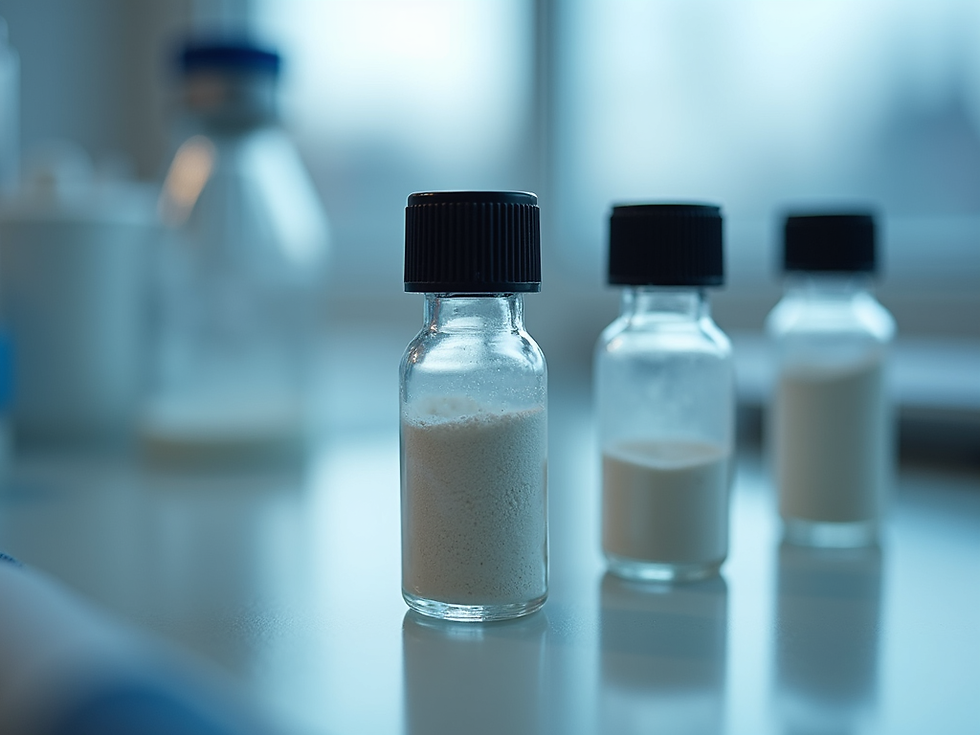
Confirm the vial appears intact, with powder or solution appearing as expected for that compound
Cross-check the batch number against the accompanying Certificate of Analysis
Transfer lyophilised peptide to correct freezer storage promptly, rather than leaving it at room temperature after opening the parcel
Note and photograph anything unusual — a crushed insulated liner, a warm cold-pack, or a damaged vial — before use, in case it affects your research protocol's assumptions about the compound's condition
If you're studying temperature-sensitive compounds, cold-chain handling during transit matters even more than usual — NAD+ 1000mg ships with the same cold-chain handling and Certificate of Analysis as the rest of the Daxer Labs range.
Research Use Only: This article is provided for laboratory and research shipping and handling context only. All Daxer Labs research peptides are supplied strictly for research use, not for human or animal use, diagnostic use, or therapeutic application.
Frequently Asked Questions
Does cold chain shipping affect research peptide purity?
Yes. Prolonged heat exposure, direct sunlight, or extended transit delays can degrade peptide structure before a vial is ever opened, independent of how the compound is stored once it arrives.
Do all research peptides need refrigerated shipping in the UK?
Not necessarily. Many lyophilised (powder) peptides are reasonably stable at ambient temperature for short, well-managed transit windows, though insulated packaging and prompt delivery still reduce risk. Reconstituted or liquid-format compounds generally need stricter temperature control.
What should I check when my research peptide order arrives?
Inspect the outer packaging for damage, confirm any cold packs are still cool where used, check the vial looks as expected, and cross-check the batch number against the Certificate of Analysis before storing or using the compound.
What happens if a research peptide shipment is delayed in transit?
An extended delay increases the cumulative risk of a temperature excursion, particularly in warmer months. If a delay is significant, it's good practice to note it and inspect the vial carefully on arrival before relying on it for a time-sensitive protocol.
Does Daxer Labs provide documentation confirming cold-chain handling?
Yes. Every Daxer Labs research peptide ships with a batch-specific Certificate of Analysis, and cold-chain handling appropriate to that compound's stability profile is standard practice across the catalogue.


Comments